


- By Rafael Pinto
- Sem comentários
- EN
The complete guide for companies in 2026
Digital time tracking: the complete guide for companies in 2026
If you still track employee working hours using spreadsheets, WhatsApp, or paper, your company is losing time, money, and productivity. Digital time tracking is no longer a trend — it has become a necessity, especially for field teams, construction sites, and service businesses.
In this guide, you’ll understand what digital time tracking is, how GPS time tracking works, and how to implement it in your company quickly and without complications.
What is digital time tracking?
Digital time tracking is the electronic recording of working hours (clock-in, breaks, and clock-out) using an online system — usually through a mobile app. It replaces manual methods and drastically reduces errors and rework.
- Replaces timesheets and spreadsheets
- Simplifies payroll closing
- Creates automatic history and reports
- Works for office and field teams
Why companies are abandoning manual time tracking
Manual time tracking may seem simple, but it creates recurring problems:
- Forgotten clock-ins/clock-outs
- Fraud and “buddy punching”
- Lack of control over field teams
- Errors in overtime and time bank calculations
- Rework for HR and finance
At the end of the month, the result is always the same: inconsistent data, discussions, and wasted time closing payroll.
GPS time tracking: when does it make sense?
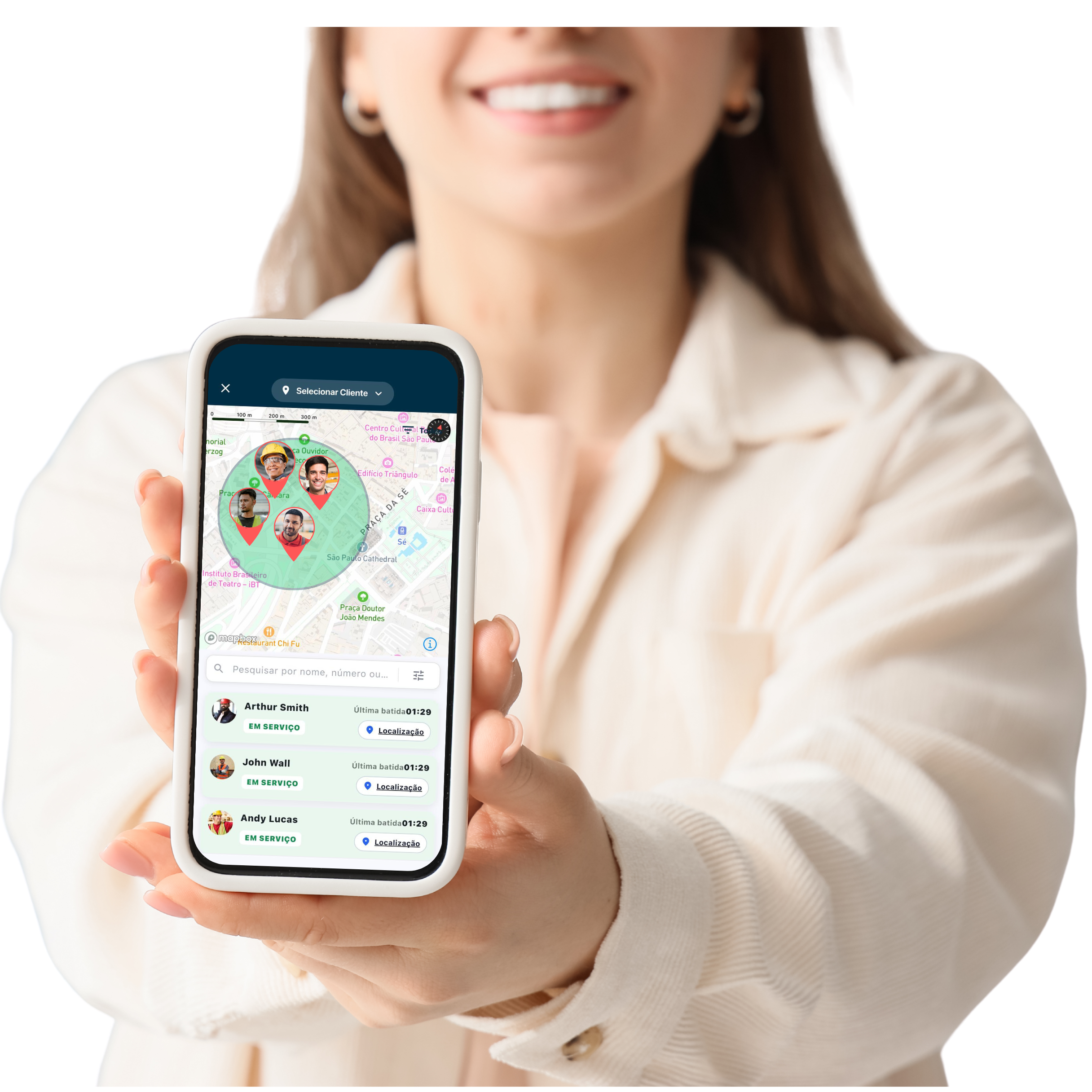
If your team works outside the office (construction, client visits, maintenance, installations, cleaning, security, telecom), GPS time tracking is one of the most efficient ways to gain visibility and reduce fraud.
With GPS, you can know:
- Where the employee started and finished their shift
- Whether they were at the client/job site at the agreed time
- How long they stayed at each location
- Whether there were unexpected trips
Geofence: clock in only in authorized areas
In addition to GPS, many companies use geofencing (a virtual boundary) to allow clock-ins only within authorized areas — for example, inside a construction site or at a client’s address.
- More security and control
- Fewer improper clock-ins
- More transparency for both company and employee
How to implement it in your company (in 4 steps)
Implementation can be fast when the system is simple:
- Add employees and permissions
- Define rules (GPS, geofence, tolerance, schedules)
- Train the team (takes just a few minutes)
- Monitor reports and adjust the process
What a good management app should include
If you also need to manage operations beyond attendance, look for an app that includes:
- GPS time tracking
- Real-time attendance
- Tasks and work orders
- Reports with photos and client signature
- History and exports for monthly closing
Conclusion
Digital time tracking isn’t just technology — it’s organization, productivity, and cost reduction. Companies that adopt this model gain visibility into their operations and make decisions based on real data.
If you want to see how it works in practice, start with a simple trial and evaluate the gains in the first weeks.
Want to try a time tracking and field team management app? Take the opportunity to explore Attendio and centralize attendance, tasks, and reports in one place.